

Consumers gain new powers. Their expectations of you will follow.

Whole industries are built around the things people would love to do, if only they had the skills. Make a film. Design a home. Build a business around an idea that won’t leave them alone. Consumerism has offered plenty of ways to pursue those ambitions: buy the equipment, take the course, hire someone who knows how.
AI is opening up another route. More of the work can be done with assistance, while the person supplies the intention, makes choices and decides when the result is worth keeping. Already, the same phone used to download someone else’s app can run one its owner has made for a particular purpose.
Over the next one to three years, expect this widening access to capability to change the relationship between consumers and the businesses that serve them. People who discover they can make, adapt or work something out for themselves will bring that experience to their next purchase. Why accept a poor fit? Why pay for a package when you only need help with one difficult part? And why abandon an idea simply because no company thinks there is a market for it?
“CAPABILITY UNBOUND” describes a new expectation: help me do the things I once had to leave to someone else.
For some purchases, that changes the reason to buy. People may spend less on ready-made answers and more on the expertise, materials or support that let them pursue an answer of their own. A consumer who can do more has more choices about where a business fits into their life.
What drives this
The desire to be capable reaches well beyond getting a task finished. Skills bring independence, pleasure and status. They let people contribute, express a point of view and feel useful. Those rewards help explain why a world full of convenient finished products still has room for people who want to make their own.
Even with templates and no-code tools, creating something useful can demand hours of learning an unfamiliar system. Generative AI is reducing some of that initial work, from navigating software to constructing a first version. The effect will vary enormously by task. But where the assistance works, the pool of people able to attempt it expands.
Creator culture has already given consumers audiences, storefronts and ways to turn a hobby into an income. The next step we foresee is more private and practical: making something useful for yourself, with no audience or customers required. Think of the needs too particular for a mass-market product, or too small to justify hiring a professional. As more of those become possible to meet at home, people can choose which remaining parts they want to buy.
What could your customers do with your expertise that they cannot do with your finished product?
From the app store to your own app
On 13 October 2026, Google began rolling out a way for adults in selected markets, including the US, to run personal Android apps made with Google AI Studio on their own devices through Google Play. A standard Google account is enough; no developer account is required for this private route. Sharing with friends and family is planned for later. [105]
The new Google Play route lets someone put a personal app to work without preparing it for a public store listing. For businesses selling software, that creates a new question: which parts of your offer will customers still choose when they can attempt a small, highly specific alternative?
On 29 October, design platform Canva introduced Brush for supported edits on its Pro plans. Users can ask for changes across a design, then continue adjusting the individual elements themselves. [106] This keeps revision within reach. A customer can reject the first result, try another direction and retain the parts they like, rather than accept whatever the system produces.
These first signals are digital. Building a home still requires materials, expertise and safety checks; making an app does not make someone a software engineer. Even in digital creation, the launches tell us what the companies are offering, rather than how many consumers will use it successfully. Watch what people start expecting after the first thing they make actually works.
A more capable customer changes the offer
For brands, the opportunity is considerably bigger than adding a creation button. Start with the ambitions your customers already bring to you. Which are frustrated by the cost of expertise, the time required to learn, or products that force everyone to work in the same way?
You could supply the parts, knowledge or tools that let people attempt more. You could help them finish: check the design, solve a stubborn problem, turn a promising prototype into something dependable. A customer’s own creation may become the beginning of a valuable relationship with a professional.
Be clear, too, about what the customer gains. Completing a task with AI does not establish that someone has learned to do it alone. Some people will want to develop that skill; others will value dependable assistance they can keep using. Your promise should reflect that difference, with evidence of learning where you sell it and dependable help where people continue to need it.
Of course, plenty of people will gladly pay you to do the whole thing. Others will want a very different relationship. What could your customers do with your expertise that they cannot do with your finished product?
Early signs of change.
by TrendWatching
3 selected innovations from the Innovation Database. Each helps explain an aspect of the shift. None establishes that the whole forecast will happen.
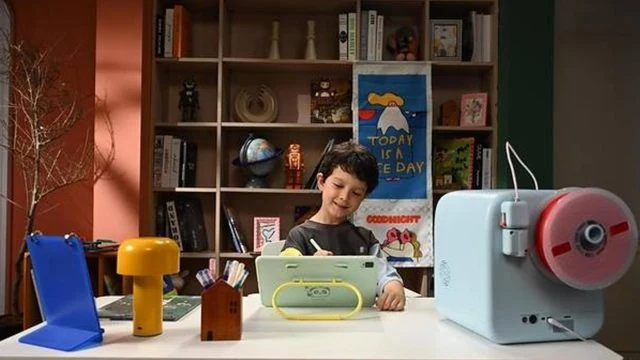
Creative tablet turns drawings into exportable 3D models
ugee makes digital drawing hardware; Tripo supplies AI tools for creating 3D models.
A drawing-to-3D workflow lowers one barrier to making an object; printing still requires suitable equipment.
Why this example is here
Drawing-to-3D is vendor-claimed integrated workflow, not evidence of retained modelling skill, educational gains or reliable printability. Printer separate; no independently checked shipping regions.
Original sourceEditorial selection · reviewed 1 Nov 2026
English practice becomes a conversation you can start now
Speak is an AI language-learning platform.
Phone Speak lets learners call an AI tutor inside the app and practice unscripted English, with feedback during and after the conversation. Its Japanese launch also supports questions in Japanese and follow-up practice based on mistakes.
Why this example is here
A paid-plan feature with usage limits. AI responses may be wrong; availability of practice does not prove lasting fluency gains.
Original sourceEditorial selection · reviewed 1 Nov 2026
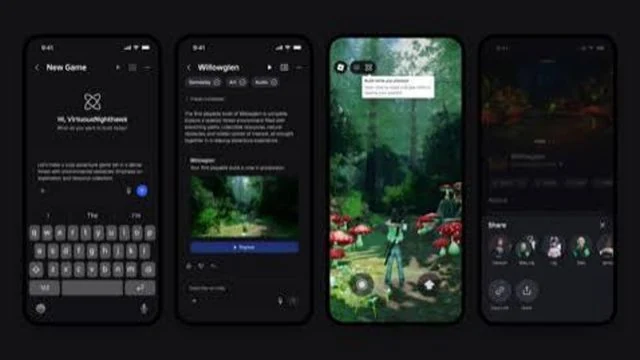
Product interface
Players get more room to build the game themselves
Roblox’s Build tool turns prompts into playable games.
Its September public-alpha expansion added Serbia and Singapore, alongside more control over assets and iteration. It gives more players a way to try making a game without first learning the full Roblox Studio workflow.
Why this example is here
Alpha access and features vary by age and region. The separately announced Scene Generator was still due later in the year; this is not a worldwide finished-product launch.
Original sourceEditorial selection · reviewed 1 Nov 2026
Dates distinguish launches, announcements and substantial updates. Examples with a more indirect connection are labelled.
Explore the sub-shifts
These more specific changes show how the main shift could play out in everyday life.

“EVERYONE A MAKER”
More people can make what no company would make for them.

“ORCHESTRATION LITERACY”
More people can direct work they could not produce alone. How will they learn to judge it?

“LEARNING WITHOUT WAITING”
Consumers will expect useful teaching in the middle of doing.

“COMPETENCE ON LOAN”
Consumers can gain useful abilities without acquiring all the skills behind them.
THE SOURCE NOTESFollow the thinking 2 sources · what they show and where their limits lie
Sources and further reading
These sources inform the article. A product announcement describes an offer, not how widely people use it. Arguments and imagined futures are kept separate from observed results.
Rollout began 13 October for adults 18+ in selected markets including the US. A Google Play route for private personal Android apps; no developer account required. Friends-and-family sharing is planned. This is not the first route to private Android apps. No adoption or outcome claim.
Official newsroom date corroborates the launch day. Supported AI design edits for Pro users; individual elements remain editable. Broader availability and Brand Kit support are planned. No independent quality or adoption claim.
About this research edition
This article draws on selected sources and our interpretation of their implications for consumers. The wider collection contains 50 articles and original illustrations. We have not read everything by everyone on the reading list, calculated the probability of each future or established worldwide adoption. The collection is not exhaustive.
The illustrations are AI-generated, with a visual approach informed by TrendWatching’s 2024 and 2025 reports. They depict ideas rather than observed events. If an article’s central idea changes, its image needs another look. Small edits need not mean a new illustration; automatic replacement is not active.
Each innovation has a source, a review date and an explanation of its relevance and limits. Some are early signs of the change; others offer a useful comparison. None proves the forecast. Monthly monitoring and automatic selection of new examples are not running.