

Company becomes available on demand. What will people expect from each other?

Most of us know what it is to want a conversation at the wrong moment. The friend who would understand is asleep. The thought feels too small to call about, or too embarrassing to say aloud. So we wait, rehearse it in our heads, or leave it unsaid.
An artificial counterpart offers another possibility: a responsive conversational partner, available when the person wants it. The conversation can be playful, reassuring or simply a way to think out loud. It need not be mistaken for a human exchange to become part of a person's day.
Over the next one to three years, we expect that availability to change how some consumers arrange their social lives. They may turn to an artificial companion for one kind of company, ask AI to help them through a difficult human conversation, and become more particular about the time they spend with other people. Others will move between these experiences without drawing neat distinctions.
When responsive conversation becomes a service people can choose, shape and return to, it can acquire personal significance well beyond the features on a subscription page.
What drives this
The desire to be heard has never fitted neatly into the time other people have available. Friendship involves two lives, with all the conflicting needs that brings. Digital communication made it easier to reach someone; it did not give that person unlimited attention.
Generative AI changes the supply of replies. A system can adapt its language to a conversation, draw on a stored history and appear ready to continue whenever the user returns. Those capabilities can make an exchange feel familiar. They do not establish that the system shares the concern it expresses.
The economic consequences run in two directions. Companies can sell continuing access to a conversational counterpart, and people may value that access enough to pay for it. At the same time, having effortless company available may make some consumers more conscious of what they want from human encounters: another point of view, shared obligations, the knowledge that someone chose to be there. Neither response requires everyone to agree about what counts as a relationship.
A feeling worth taking seriously
A conversation can leave someone feeling less lonely without changing the social life they return to afterwards. In De Freitas and colleagues' 2025 experiments, AI companions provided momentary relief, including during repeated use over a week; lasting improvement was not established. A separate four-week study by Fang and colleagues found concerning associations among heavier users, but could not establish that the extra use caused those outcomes. [47] [48]
What happens when a familiar, accommodating counterpart becomes a regular part of the day? Sociologist Sherry Turkle worries that simulated intimacy can change what people expect from one another, an argument she develops in an October 2026 interview. Philosopher Helen Ryland's earlier account leaves more room for degrees of friendship. These differing views matter because consumers may attach very different meanings to the same kind of exchange. [45] [46]
For businesses, the practical consequence is that feeling heard and becoming better connected are different promises. An enjoyable conversation can have value on its own. A claim to improve someone's wider relationships needs evidence of what happens outside the product.
More ways to make room for other people
There is considerable room for invention beyond the standalone companion. You could help someone rehearse a difficult conversation, make a shared activity easier to join, or give a group a useful artificial participant. Each changes a different part of social life. A service that helps two people reconnect has a different job from one that supplies company when neither wants to call anyone.
Think carefully about what people will come to rely on. A familiar voice, remembered history or recurring exchange can become part of a routine. Changing it may matter far more to a customer than a conventional software update. Continuing access, understandable changes and an uncomplicated way to leave belong in the offer from the beginning.
And consider the opportunities for human company, too. A group worth returning to. A gathering where newcomers have something to contribute. A place where another person's presence cannot be generated to order. The arrival of artificial company gives you more ways to serve the desire for connection—and more reason to be precise about the kind you offer.
Early signs of change.
by TrendWatching
3 selected innovations from the Innovation Database. Each helps explain an aspect of the shift. None establishes that the whole forecast will happen.
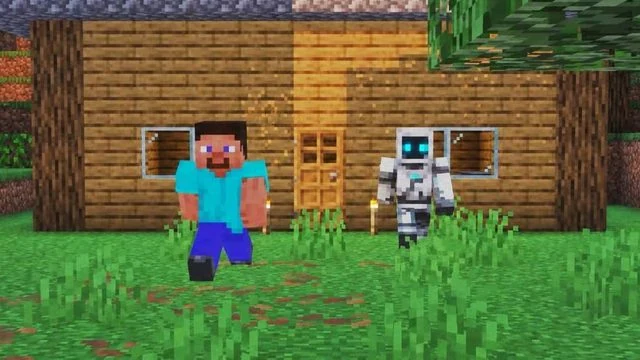
Minecraft add-on adds simulated players to solo worlds
Gamemode One develops Minecraft content and add-ons.
Traditional game AI simulates other participants; this is not a generative companion or evidence of human friendship.
Why this example is here
Traditional in-game AI, NOT generative AI; offline after download, Bedrock; can mix artificial and human participants. FAQ https://support.gamemodeone.com/hc/en-us/articles/55874656159003-Frequently-Asked-Questions-for-AI-Players-Add-On (October16 update is not launch). No social wellbeing claim.
Original sourceEditorial selection · reviewed 1 Nov 2026

Product image
A touch-responsive panda brings artificial company into the room
Companion-robot developer Mind With Heart Robotics
Embodied, responsive company outside a screen.
Why this example is here
The company announced September distribution and completed production of 100 units. This is not independent proof of consumer delivery, emotional reciprocity or improved wellbeing.
Original sourceEditorial selection · reviewed 1 Nov 2026

Campaign or promotional image
Five AI workout buddies join the gym routine
European fitness chain Basic-Fit
Synthetic company becomes part of a recurring consumer service rather than a standalone companion app.
Why this example is here
The Dutch introduction was in 2025, not a new September 2026 launch. The Belgian announcement does not establish improved retention or lasting wellbeing; the company describes the assistants as complements to human trainers.
Original sourceEditorial selection · reviewed 1 Nov 2026
Dates distinguish launches, announcements and substantial updates. Examples with a more indirect connection are labelled.
Explore the sub-shifts
These more specific changes show how the main shift could play out in everyday life.

“PERSISTENT COMPANIONS”
A familiar counterpart gives people a new reason to keep a subscription.

“RELATIONSHIP MEDIATION”
Help with the conversation becomes part of the relationship.

“HYBRID COMMUNITIES”
Groups gain artificial participants. Members will decide what they are there for.

“HUMAN-PRESENCE PREMIUM”
As conversation becomes easier to generate, some people will make more room for company that asks something of them.
THE SOURCE NOTESFollow the thinking 4 sources · what they show and where their limits lie
Sources and further reading
These sources inform the article. A product announcement describes an offer, not how widely people use it. Arguments and imagined futures are kept separate from observed results.
Momentary relief was observed; lasting improvement and replacement of human care were not established.
The researchers randomized system configurations, not how much people used them; there was no non-chatbot control group. Associations between heavy use and outcomes therefore do not establish that the extra use caused those outcomes.
A critical argument about reciprocity and expectations, not an outcome trial.
A conceptual alternative to all-or-nothing friendship; not evidence of machine consciousness.
About this research edition
This article draws on selected sources and our interpretation of their implications for consumers. The wider collection contains 50 articles and original illustrations. We have not read everything by everyone on the reading list, calculated the probability of each future or established worldwide adoption. The collection is not exhaustive.
The illustrations are AI-generated, with a visual approach informed by TrendWatching’s 2024 and 2025 reports. They depict ideas rather than observed events. If an article’s central idea changes, its image needs another look. Small edits need not mean a new illustration; automatic replacement is not active.
Each innovation has a source, a review date and an explanation of its relevance and limits. Some are early signs of the change; others offer a useful comparison. None proves the forecast. Monthly monitoring and automatic selection of new examples are not running.