

Sub-shift
“COMPETENCE ON LOAN”
Consumers can gain useful abilities without acquiring all the skills behind them.

People have always depended on knowledge they do not personally possess. Specialists, tools and other people make everyday life possible. AI extends the range of tasks that can be carried out with assistance, often through the same conversational interface.
As that assistance becomes more capable, consumers can take on activities they would previously have paid someone else to perform or abandoned altogether. Some will learn along the way. Others will reasonably decide that dependable access to the result is enough.
The difficulty comes when the arrangement is unclear. A person may believe they have acquired a skill when the system has been doing the crucial part. They may discover how much they depend on it only when a subscription ends, a feature changes or a situation requires their own judgment.
Different promises deserve different products
Within “CAPABILITY UNBOUND”, this is the question of what people retain. The ability to complete a task with help can be valuable in its own right. It should not be sold as proof that someone can now perform independently.
A study published in 2025, based on AI-assisted mathematics practice in one Turkish high school, illustrates the risk. Unrestricted help improved practice performance but reduced later unaided results. A tutor designed around teacher-informed hints largely removed that harm, without demonstrating a positive exam effect. This was a specific, short-term educational setting, not evidence that AI inevitably makes people less capable. [43]
For a learning business, the implication is to measure what remains when the help is reduced. For a service selling ongoing assistance, continuity matters more: customers need to know what they can rely on, what happens when it fails and how to move their work elsewhere.
Some will learn along the way. Others will reasonably decide that dependable access to the result is enough.
Make dependence a choice people understand
Someone who comes to rely on assisted ability may treat continued access as necessary equipment. Losing the service could mean losing a practical way of doing something that has become part of their life. That could change how consumers judge its price, reliability and the consequences of switching, even when they have no wish to learn the underlying skill.
For businesses, this creates two different relationships to develop. You might help a learner gradually need less assistance, or provide continuing support that becomes more useful as you understand their circumstances. Educators will need to distinguish assisted output from acquired skill; other providers may earn loyalty through an ability the customer is happy to keep accessing.
Avoid making unaided performance the only respectable goal. Continuing support can give disabled people, people working in another language and many others more control over their lives. Removing that support to prove independence would defeat its purpose.
Tell customers what they are gaining, what they are relying on and what they can keep.
Early signs of change.
by TrendWatching
1 closely related example from the Innovation Database. Each helps explain an aspect of the shift. None establishes that the whole forecast will happen.
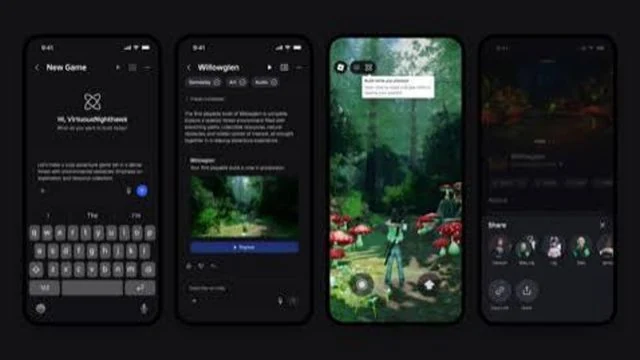
Product interface
Players get more room to build the game themselves
Roblox’s Build tool turns prompts into playable games.
People can produce an assisted game without first mastering the full development environment; continued ability depends on the platform.
Why this example is here
Alpha access and features vary by age and region. The separately announced Scene Generator was still due later in the year; this is not a worldwide finished-product launch.
Original sourceEditorial selection · reviewed 1 Nov 2026
Dates distinguish launches, announcements and substantial updates. Examples with a more indirect connection are labelled.
See the full selection for “CAPABILITY UNBOUND”THE SOURCE NOTESFollow the thinking 1 source · what they show and where their limits lie
Sources and further reading
These sources inform the article. A product announcement describes an offer, not how widely people use it. Arguments and imagined futures are kept separate from observed results.
One Turkish high school; short-term mathematics outcomes. Guardrails changed the result.
About this research edition
This article draws on selected sources and our interpretation of their implications for consumers. The wider collection contains 50 articles and original illustrations. We have not read everything by everyone on the reading list, calculated the probability of each future or established worldwide adoption. The collection is not exhaustive.
The illustrations are AI-generated, with a visual approach informed by TrendWatching’s 2024 and 2025 reports. They depict ideas rather than observed events. If an article’s central idea changes, its image needs another look. Small edits need not mean a new illustration; automatic replacement is not active.
Each innovation has a source, a review date and an explanation of its relevance and limits. Some are early signs of the change; others offer a useful comparison. None proves the forecast. Monthly monitoring and automatic selection of new examples are not running.