

Consumers will expect services to fit the circumstances they are in, not just the habits they have recorded.

A parent plays the same children’s song every morning. A recommendation system can learn that pattern perfectly and still misunderstand whose taste it represents. Repetition tells the service what happened. It does not always tell it what the person wants next.
That gap runs through everyday personalization. The regular customer is travelling this week. The person who normally chooses the cheapest option needs something dependable for an important occasion. Two people using the same account want different things. A service can know a great deal about past behavior and still offer a poor fit.
“MADE FOR ONE” looks ahead to a more responsive relationship. Over the next one to three years, we expect consumers to bring more of their actual circumstances into an encounter and ask the service to accommodate them. The ambition extends beyond recommending the right product to changing its timing, presentation or configuration so it works better in that particular situation.
When the record needs explaining
Spotify’s 15 September 2026 update gives a small, concrete example. A new mobile setting, rolling out globally to Free and Premium users, lets listeners exclude children’s and family music from the profile that shapes their recommendations. They can keep playing the music without treating those plays as a guide to everything else they want to hear. [118]
The technology is not creating a new human desire. People have always wanted to explain an exception, correct an assumption or ask for something slightly different. What may change is how often a service can respond without requiring a bespoke arrangement with a member of staff.
AI could help translate the explanation into something a system can use. Rather than make a customer squeeze several circumstances into one menu option, it could interpret the combination and identify an appropriate response. That possibility depends on reliable interpretation and a service with enough flexibility to act on it. Understanding why an appointment is inconvenient does not create another available slot.
What makes a good fit valuable
In his 1979 lecture on equality, economist Amartya Sen distinguished the resources people possess from what those resources enable them to do. The same provision can be more useful to one person than another because their circumstances differ. Applied to consumer services, that suggests a more demanding measure of personalization: does the adjustment make the service usable or worthwhile in someone’s life? [32]
The value can be practical or pleasurable. An easier format can make information accessible; a preferred voice can simply make it more enjoyable. A delivery that fits working hours can prevent a missed parcel. An experience that accommodates a visiting relative can matter for one weekend without becoming a permanent preference.
Good adaptation need not mean managing a detailed profile. Some people will want to give instructions; others will prefer a dependable default that quietly fits. Both could support this shift. If consumers abandon a settings dashboard, that does not prove they want the same rigid offer for everyone.
More useful to the customer—or more useful to you?
A close fit can also make persuasion more effective. In 2024 experiments, Sandra Matz and colleagues found that AI-written messages tailored to psychological characteristics could be rated as more persuasive and, in some tests, increase what people said they would pay. The effects varied; stated willingness to pay is not a purchase. That gives businesses another reason to ask whose interests their personalization serves. [119]
You might use a better understanding of a customer to help them spend less, choose something suitable or avoid a frustrating interaction. You might also use it to make an unwanted upgrade harder to resist. Both can look highly relevant in a demonstration. They create very different reasons for the person to continue the relationship.
Shared lives add another complication. A room, account or budget may serve several people. Perfectly adapting it to the most visible user could make it worse for everyone else. The service needs a way to recognize a temporary situation and accommodate more than one legitimate preference.
For businesses, start where the standard offer repeatedly disappoints people for understandable reasons. A changed work pattern, a temporary constraint or an unfamiliar use might reveal a valuable adjustment. Make that adjustment easy to request and easy to undo. The commercial opportunity is to become useful in situations your standard customer profile currently misses.
Early signs of change.
by TrendWatching
3 selected innovations from the Innovation Database. Each helps explain an aspect of the shift. None establishes that the whole forecast will happen.
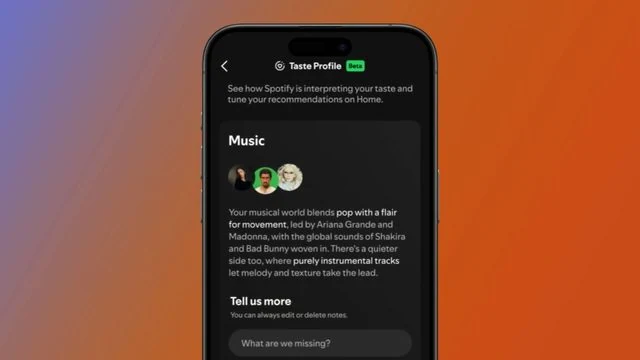
Spotify expands Taste Profile beta to eligible US listeners
Spotify is the music and audio streaming service.
Listeners can correct how their taste is represented; broader discovery beyond familiar interests is not established.
Why this example is here
US/NewZealand Premium18+, mobile, guidance to Homefeed. Not original global launch or control over entire recommendation algorithm.
Original sourceEditorial selection · reviewed 1 Nov 2026

Heating mat adds opt-in temperature and presence adjustments
Kiturami is a South Korean heating manufacturer.
Optional temperature adaptation responds to individual settings and presence, within one everyday product.
Why this example is here
User enables AI mode with remote; ordinary heating mode also available. Manufacturer describes temperature/presence adjustments. No independent improved-sleep claim; 2027 is model year.
Original sourceEditorial selection · reviewed 1 Nov 2026
Product interface
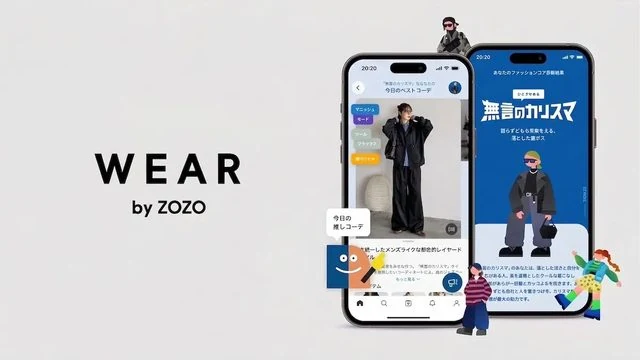
An outfit recommendation comes with a reason and a try-on
ZOZO operates Japanese fashion platforms including WEAR.
WEAR’s new styling room combines a taste assessment with outfit suggestions that can take account of the weather, body concerns and items already owned. It explains recommendations and offers a generated try-on, making the fit of a suggestion more visible before purchase.
Why this example is here
Virtual try-on illustrates a look; it is not a guarantee of physical fit. The experience also links to shopping on ZOZOTOWN.
Original sourceEditorial selection · reviewed 1 Nov 2026
Dates distinguish launches, announcements and substantial updates. Examples with a more indirect connection are labelled.
Explore the sub-shifts
These more specific changes show how the main shift could play out in everyday life.

“ADAPTIVE ESSENTIALS”
Everyday services could become useful to more people by responding to the circumstances a standard offer overlooks.

“PREDICTIVE PROVISION”
Consumers may come to expect a service to notice a relevant change before it turns into another task.

“PERSONAL REALITY STREAMS”
The same material could arrive in different forms, chosen for the person and the moment.

“THE RIGHT TO SURPRISE”
A good personal service may need to help people discover interests their past behavior cannot predict.
THE SOURCE NOTESFollow the thinking 3 sources · what they show and where their limits lie
Sources and further reading
These sources inform the article. A product announcement describes an offer, not how widely people use it. Arguments and imagined futures are kept separate from observed results.
Full body read. New mobile toggle rolled out globally to Free and Premium listeners from 15 September. Family music is included by default; users can exclude its influence retrospectively, with changes potentially taking 48 hours. Actual feature launch 46 days before review, not a new article about an old launch. No measured consumer behavior or perfect classification claimed.
Sen distinguishes the resources people have from what they are able to do with them. Applying that distinction to adaptive services is our interpretation, rather than a technology forecast by Sen.
About this research edition
This article draws on selected sources and our interpretation of their implications for consumers. The wider collection contains 50 articles and original illustrations. We have not read everything by everyone on the reading list, calculated the probability of each future or established worldwide adoption. The collection is not exhaustive.
The illustrations are AI-generated, with a visual approach informed by TrendWatching’s 2024 and 2025 reports. They depict ideas rather than observed events. If an article’s central idea changes, its image needs another look. Small edits need not mean a new illustration; automatic replacement is not active.
Each innovation has a source, a review date and an explanation of its relevance and limits. Some are early signs of the change; others offer a useful comparison. None proves the forecast. Monthly monitoring and automatic selection of new examples are not running.