

Sub-shift
“EVERYONE A MAKER”
More people can make what no company would make for them.

Much of the recent business around consumer creation has depended on finding an audience. Post the photograph. Sell the handmade piece. Turn the side project into a business. Platforms have made it easier to find people who share a taste, an interest or an unusually specific problem.
Now, consider the things worth making even when nobody else wants them. A tool that accommodates one household’s arrangements. A game whose rules make sense to one group of friends. Something that will be useful for three weeks and never again. Many such ideas have been too small to interest a supplier, yet too difficult for their intended users to make.
As AI reduces some of the work of creating a first version, more of these projects become worth attempting. The emerging expectation is personal and practical: I should be able to make something that fits, without first proving that enough other people want it.
The customer supplies the particularities
Mass-market products succeed by finding enough common ground. Personal making allows the exceptions to lead. The family knows its complicated routine; the club knows why the usual booking system causes arguments. That knowledge becomes useful design material when people have a workable means of acting on it.
Google’s 13 October 2026 rollout offers one route. Adults in selected markets, including the US, can use Google Play to run personal Android apps made with Google AI Studio, without a developer account for that private use. Friends-and-family sharing remains planned for later. [105]
That makes a market of one easier to serve. It does not settle whether the app will remain useful, secure or affordable to maintain. Those questions become more important once somebody starts relying on what they have made.
Nor will people necessarily want the most polished result. A familiar detail, an unusual rule or a slightly awkward way of doing things might be the reason to make it themselves. Tools that smooth away every oddity risk removing the personal value along with the rough edges.
The emerging expectation is personal and practical: I should be able to make something that fits, without first proving that enough other people want it.
Find a role in what people make
For businesses, this opens relationships that a finished-product catalogue cannot offer. A customer might begin with your components, ask you to check a design, or pay for help after their project grows beyond their ability. Your expertise can remain valuable even when you no longer control the whole result.
Start with the modifications people already request. Which are rejected because they are too particular? Which could you enable safely with adaptable parts and a route to expert help? Digital creations are an early testing ground; physical products still need materials, manufacturing and the appropriate safety checks.
There is a less attractive version of this future, in which customers inherit work that the company used to do for them. Participation needs to be a genuine choice. Keep the finished option for people who want it, and make the costs of maintaining a personal creation clear.
A successful project may simply become something a person uses every day.
Early signs of change.
by TrendWatching
2 closely related examples from the Innovation Database. Each helps explain an aspect of the shift. None establishes that the whole forecast will happen.
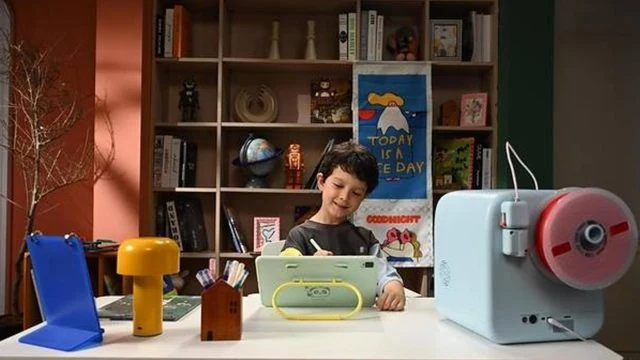
Creative tablet turns drawings into exportable 3D models
ugee makes digital drawing hardware; Tripo supplies AI tools for creating 3D models.
A drawing-to-3D workflow lowers one barrier to making an object; printing still requires suitable equipment.
Why this example is here
Drawing-to-3D is vendor-claimed integrated workflow, not evidence of retained modelling skill, educational gains or reliable printability. Printer separate; no independently checked shipping regions.
Original sourceEditorial selection · reviewed 1 Nov 2026
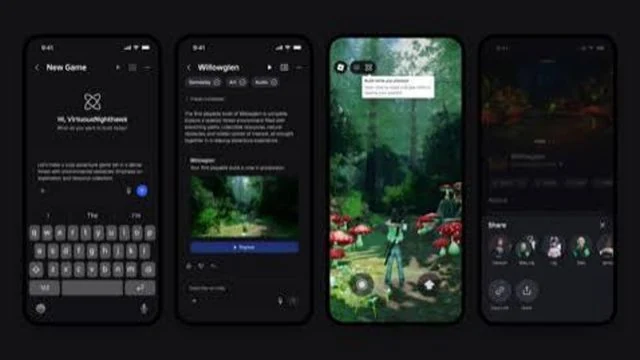
Product interface
Players get more room to build the game themselves
Roblox’s Build tool turns prompts into playable games.
Making a game for fun or a small audience becomes more approachable; the tool does not require that the idea become a business.
Why this example is here
Alpha access and features vary by age and region. The separately announced Scene Generator was still due later in the year; this is not a worldwide finished-product launch.
Original sourceEditorial selection · reviewed 1 Nov 2026
Dates distinguish launches, announcements and substantial updates. Examples with a more indirect connection are labelled.
See the full selection for “CAPABILITY UNBOUND”THE SOURCE NOTESFollow the thinking 1 source · what they show and where their limits lie
Sources and further reading
These sources inform the article. A product announcement describes an offer, not how widely people use it. Arguments and imagined futures are kept separate from observed results.
Rollout began 13 October for adults 18+ in selected markets including the US. A Google Play route for private personal Android apps; no developer account required. Friends-and-family sharing is planned. This is not the first route to private Android apps. No adoption or outcome claim.
About this research edition
This article draws on selected sources and our interpretation of their implications for consumers. The wider collection contains 50 articles and original illustrations. We have not read everything by everyone on the reading list, calculated the probability of each future or established worldwide adoption. The collection is not exhaustive.
The illustrations are AI-generated, with a visual approach informed by TrendWatching’s 2024 and 2025 reports. They depict ideas rather than observed events. If an article’s central idea changes, its image needs another look. Small edits need not mean a new illustration; automatic replacement is not active.
Each innovation has a source, a review date and an explanation of its relevance and limits. Some are early signs of the change; others offer a useful comparison. None proves the forecast. Monthly monitoring and automatic selection of new examples are not running.