

When more can be done for people, they will become more particular about what they still want to do.

People already pay to do things slowly. Learn an instrument. Spend a morning making bread. Travel somewhere they have already explored on a screen. They also pay to avoid effort, and spend evenings happily doing very little. A person can want all of those things without being inconsistent.
AI brings a new choice into more activities. It can help with the preparation, offer guidance along the way or attempt the whole thing. That makes the boundary between convenience and participation something a consumer can negotiate more often. Which part would they gladly hand over? Which part did they come for?
Over the next one to three years, we expect that question to reshape offers across learning, leisure, entertainment and everyday services. Customers may want a finished result tonight and a chance to work it out themselves tomorrow. They may use saved time for a shared activity, an invented world or a much-needed rest. A product built around one approved use of freedom will misunderstand a great many people.
“MEANING AFTER EFFICIENCY” describes a widening expectation of choice over effort and attention. Your customer’s reason to buy may depend as much on what they want to keep doing as on what they want you to take away.
What drives this
Convenience has long promised to give people time back. Digital services made it easier to arrange, order and watch things; generative AI can now participate in the activity itself. A tool that drafts a story or solves a puzzle does more than shorten the preparation. It changes which parts of the experience remain with the person.
Psychologists Michael Inzlicht, Amitai Shenhav and Christopher Olivola’s 2018 review of the effort paradox explains why that matters. Effort can be costly and also contribute to what people value about an activity. That helps explain why removing work can sometimes remove a reason to participate. [77]
There is no automatic supply of spare hours, however. Faster work can lead to more assignments; domestic care can absorb time saved elsewhere. Kathi Weeks’s 2014 argument about the centrality of paid work is a political account of who controls time, not a prediction that technology will abolish employment. The consumer future depends partly on whether people gain any say over the capacity that becomes available. [102]
An evening can be worth creating for itself
Generated entertainment belongs inside this future as a positive possibility. On 7 October 2026, Google launched Playground, an experimental browser-based platform for making and playing custom games, for US users aged 18 and over. Creation access rolls out in tiers according to Google AI subscriptions. People can direct a game through text, keep it private or share it; multiplayer is supported in selected genres. [117]
The launch shows a new way to assemble entertainment, not evidence of how satisfying people will find it. But consider the possible occasion: friends make something peculiar to their group and enjoy playing it. The result need not become a business, a portfolio or proof of a newly acquired skill to have been worth their time.
For leisure businesses, that enlarges the competition. You may be competing with something customers can shape themselves, around an in-joke, a mood or an interest too small for your catalogue. You could help people create those occasions, supply distinctive material or offer experiences that gain their character from the people taking part.
Give people a choice worth making
The four subshifts explore effort someone chooses, shared physical occasions, contribution beyond output and protection from unwanted demands. They sit alongside synthetic pleasure and ordinary rest. None is a superior destination for everyone.
If you run a learning or creative service, make the level of assistance adjustable. A useful hint can preserve the experience someone wanted; completing the task can be the right answer when they simply need it done. If you bring people together, the practical conditions matter too. Jenny Odell’s 2023 account of time emphasizes its social character: being available alone is different from having time with others. [78]
That gives you work beyond making the experience appealing. Timing, childcare, transport, accessible formats and dependable groups can determine who is able to participate. Someone who cannot attend does not necessarily need a more inspiring invitation.
Watch what customers return for after the convenience is familiar. They may want help doing more, space to practice or entertainment that makes an unremarkable evening enjoyable. Build the offer around those preferences rather than asking people to justify them.
Early signs of change.
by TrendWatching
3 selected innovations from the Innovation Database. Each helps explain an aspect of the shift. None establishes that the whole forecast will happen.
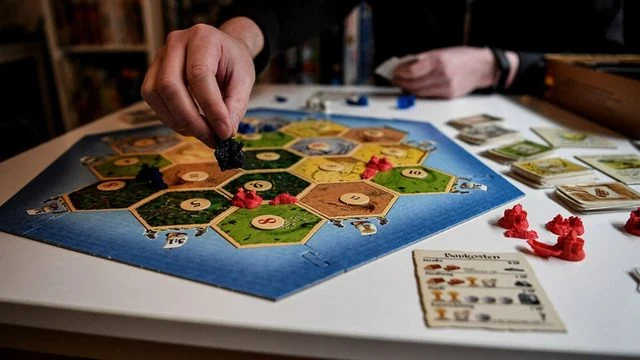
Asmodee opens a free hub for more accessible game nights
Asmodee is a tabletop-games publisher and distributor.
Accessibility information helps people arrange shared play; this non-AI example illustrates participation rather than automation.
Why this example is here
A non-AI participation example; uptake and wellbeing gains have not been established. The live site still labels game guides as coming soon.
Original sourceEditorial selection · reviewed 1 Nov 2026
A flight becomes time to write someone a postcard
India Post and airline IndiGo ran a handwritten-postcard campaign.
On selected flights connecting six Indian cities, passengers received postcard kits and could post their messages at arrival airports. The campaign made room for an activity whose personal effort is part of its appeal.
Why this example is here
A one-day, non-AI campaign: adjacent inspiration for choosing what to do personally, not evidence that AI caused a return to letter writing.
Original sourceEditorial selection · reviewed 1 Nov 2026
A place to spend time without having to achieve anything
Founders Row and Morphus announced a studio concept for intentional rest.
The proposed better.states studios combine phone-free time with light, sound and vibration sessions. Their offer treats unproductive time as something worth making space for, rather than another period to fill with tasks.
Why this example is here
Announced concept, with four studios planned for 2027—not a verified open network. Non-AI adjacent inspiration; no independent health or recovery benefits were established in this review.
Original sourceEditorial selection · reviewed 1 Nov 2026
Dates distinguish launches, announcements and substantial updates. Examples with a more indirect connection are labelled.
Explore the sub-shifts
These more specific changes show how the main shift could play out in everyday life.

“CHOSEN DIFFICULTY”
Customers will want more say over which parts of an activity remain theirs.

“LIVE / PHYSICAL INTENSITY”
Shared occasions will need to offer something people can only contribute by taking part.

“PURPOSE BEYOND PRODUCTIVITY”
Some customers will want a continuing role in what they care about.

“ATTENTION SHELTER”
People will expect services to respect the point at which they have had enough.
THE SOURCE NOTESFollow the thinking 4 sources · what they show and where their limits lie
Sources and further reading
These sources inform the article. A product announcement describes an offer, not how widely people use it. Arguments and imagined futures are kept separate from observed results.
Effort can be costly and valued; not evidence of an AI-era consumer trend.
Dated work/time allocation argument, not AI joblessness forecast. Actual source read in research pass.
Actual launch Oct7 US18+; tiered creation access by Google AI subscription; browser phone/laptop; multiplayer select genres. Unity integration future omitted. Substantive authored body read, not AI summary. No adoption/quality claim.
Odell offers a philosophical account of time and agency in social life. We paraphrase the argument; it is not an empirical forecast about AI.
About this research edition
This article draws on selected sources and our interpretation of their implications for consumers. The wider collection contains 50 articles and original illustrations. We have not read everything by everyone on the reading list, calculated the probability of each future or established worldwide adoption. The collection is not exhaustive.
The illustrations are AI-generated, with a visual approach informed by TrendWatching’s 2024 and 2025 reports. They depict ideas rather than observed events. If an article’s central idea changes, its image needs another look. Small edits need not mean a new illustration; automatic replacement is not active.
Each innovation has a source, a review date and an explanation of its relevance and limits. Some are early signs of the change; others offer a useful comparison. None proves the forecast. Monthly monitoring and automatic selection of new examples are not running.