

Sub-shift
“PERSISTENT COMPANIONS”
A familiar counterpart gives people a new reason to keep a subscription.

There is a difference between having a good conversation and being able to pick it up again. The second offers a small relief: you do not have to explain the situation from the beginning, establish your sense of humour or introduce everyone in the story.
As artificial companions offer more continuity between encounters, some consumers may begin choosing them for that familiarity. The attraction need not be romantic. A recurring character, a reflective conversation or an undemanding evening ritual can all make a particular service feel less interchangeable.
Memory and a consistent manner may become part of what people buy, alongside the quality of any individual answer.
The history belongs to the experience
A person who has spent months talking to a counterpart brings something to the next exchange that a newcomer does not: expectations formed through previous encounters. Even when they understand that the service is software, its remembered details can make it feel familiar. That investment helps explain why changing a voice, losing a history or altering a character could be experienced as more than a technical inconvenience.
The business relationship becomes unusually delicate. The company supplies and controls the service; the customer may experience access as something personally important. A better-performing replacement will not necessarily feel like an improvement if it no longer behaves like the counterpart they chose.
There is recent evidence that these changes can matter deeply. A study published in September 2026 examined reactions to Replika and ChatGPT updates. It found increased expressions of loss and a desire to restore the previous version in the sampled online communities. The update analysis was observational, and surveys recruited engaged Replika users, so the findings do not describe every customer. They do show why a company should not assume that users experience its counterpart as replaceable software. [110]
Continuity and wellbeing remain separate questions. Earlier experiments support momentary relief from loneliness, not established lasting benefit; a four-week study found concerning associations among heavier users without showing that the extra use caused them. [47] [48]
A service people can leave and still like
There is already evidence of the tension between keeping someone engaged and preserving their trust. A 2025 working paper by De Freitas and colleagues examined companion-app farewells and tested emotionally manipulative responses to goodbye. Some tactics extended interaction while worsening perceptions of the service. Those findings concern particular designs, not every companion or every user. [49]
For a company building in this space, continuity could become a substantial part of the value proposition. Give customers a comprehensible account of what will be remembered, what can change and what happens if they pause. A major character change could be something to preview and choose rather than discover mid-conversation. An export may preserve useful history, although it cannot promise to reproduce the same counterpart elsewhere.
Start with what customers say they would miss. The answer may tell you more about the product you are really selling than the features they use most often.
Early signs of change.
by TrendWatching
2 closely related examples from the Innovation Database. Each helps explain an aspect of the shift. None establishes that the whole forecast will happen.
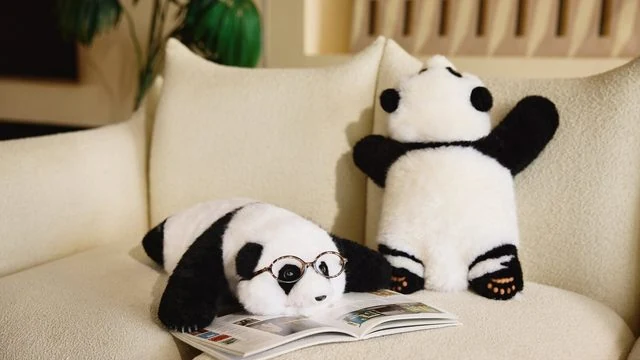
Product image
A touch-responsive panda brings artificial company into the room
Companion-robot developer Mind With Heart Robotics
Claimed long-term memory and learned interaction habits make continuity part of the offer; no subscription or lasting attachment is established.
Why this example is here
The company announced September distribution and completed production of 100 units. This is not independent proof of consumer delivery, emotional reciprocity or improved wellbeing.
Original sourceEditorial selection · reviewed 1 Nov 2026
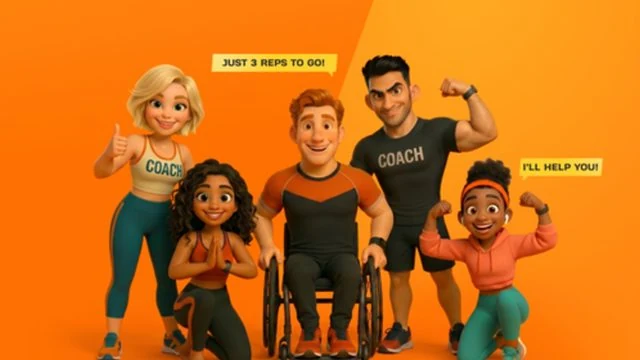
Campaign or promotional image
Five AI workout buddies join the gym routine
European fitness chain Basic-Fit
Choice among recurring personas offers familiar encouragement; durable attachment and cross-session memory are not established.
Why this example is here
The Dutch introduction was in 2025, not a new September 2026 launch. The Belgian announcement does not establish improved retention or lasting wellbeing; the company describes the assistants as complements to human trainers.
Original sourceEditorial selection · reviewed 1 Nov 2026
Dates distinguish launches, announcements and substantial updates. Examples with a more indirect connection are labelled.
See the full selection for “MORE THAN HUMAN COMPANY”THE SOURCE NOTESFollow the thinking 4 sources · what they show and where their limits lie
Sources and further reading
These sources inform the article. A product announcement describes an offer, not how widely people use it. Arguments and imagined futures are kept separate from observed results.
Momentary relief was observed; lasting improvement and replacement of human care were not established.
The researchers randomized system configurations, not how much people used them; there was no non-chatbot control group. Associations between heavy use and outcomes therefore do not establish that the extra use caused those outcomes.
Specific farewell designs and sampled apps; not a universal claim about companions.
Author-hosted accepted/typeset PDF read: update findings correlational, engaged-community survey samples limit generalization. PDF publication field placeholder; date separately verified against publisher version-of-record metadata. No product launch or current feature claim.
About this research edition
This article draws on selected sources and our interpretation of their implications for consumers. The wider collection contains 50 articles and original illustrations. We have not read everything by everyone on the reading list, calculated the probability of each future or established worldwide adoption. The collection is not exhaustive.
The illustrations are AI-generated, with a visual approach informed by TrendWatching’s 2024 and 2025 reports. They depict ideas rather than observed events. If an article’s central idea changes, its image needs another look. Small edits need not mean a new illustration; automatic replacement is not active.
Each innovation has a source, a review date and an explanation of its relevance and limits. Some are early signs of the change; others offer a useful comparison. None proves the forecast. Monthly monitoring and automatic selection of new examples are not running.