

Sub-shift
“THE RIGHT TO SURPRISE”
A good personal service may need to help people discover interests their past behavior cannot predict.

People do not always know what they would enjoy until they encounter it. A friend takes them to an unfamiliar performance. A book leads into a subject they had never considered. A shop introduces a style that would not have appeared on their wish list.
Personalization can support these discoveries. It can also become very good at repeating what already works. “THE RIGHT TO SURPRISE” explores the expectation that a service should leave room for both familiarity and a change of direction.
A preference can be an invitation to explore
Spotify’s 23 September 2026 Taste Profile beta expansion brought a more explicit conversation about recommendations to US Premium listeners aged 18 and over, following earlier testing in New Zealand. Eligible listeners can see an interpretation of their interests and write guidance for their Home feed, including genres or subjects they would like to explore. The notes steer recommendations rather than guarantee a particular result. [122]
That is a small change in how the relationship works. The person can express curiosity before a listening history exists to demonstrate it. It does not establish that everyone wants to manage recommendations, or that the feature reliably creates meaningful discovery.
Over the next one to three years, we expect some consumers to make this distinction more often: sometimes they want more of what they already like, and sometimes they want help going somewhere else. A useful service could accommodate either intention without turning one experimental choice into a permanent assumption.
Discovery depends on what the service is trying to do
An assistant could make choices that distinguish you from other people while giving you less variety of your own. In a preprint revised in August 2026, Sandra Matz and colleagues compared human selections with choices made by AI agents. In one study, personalized agents chose less popular books, films and podcasts, but the choices within each set were more alike than in the human selections, by the researchers’ measure of similarity between descriptions. Generic agents showed a different trade-off. The study did not follow changes in people’s interests over time. It gives a discovery service something useful to test: does knowing a customer better help them explore? [123]
Philosopher C. Thi Nguyen’s account of value capture describes how simplified measures can displace richer purposes. For a discovery service, that raises a practical issue: a recommendation that wins an immediate click may serve a different goal from an experience that develops a lasting interest. The application is ours; the difference can matter to what a business chooses to reward. [4]
Surprise need not mean random selection. A knowledgeable person can make unfamiliar material approachable, explain why it might appeal and give someone a place to begin. There is room for that kind of guidance within a personalized service.
Make room for a different kind of visit
A retailer could offer a carefully chosen detour from a customer’s usual style. A cultural venue could help someone explore a subject beyond their existing interests. A travel service could respond to a stated ambition instead of assuming that the next trip should resemble the last. These are prospective applications whose appeal would need to be tested.
The same customer may want predictable essentials and an unfamiliar weekend. There is no need to make every encounter adventurous. The business opportunity is to recognize when people want to develop a new interest and offer enough help for the unfamiliar option to feel worth trying.
Early signs of change.
by TrendWatching
1 closely related example from the Innovation Database. Each helps explain an aspect of the shift. None establishes that the whole forecast will happen.
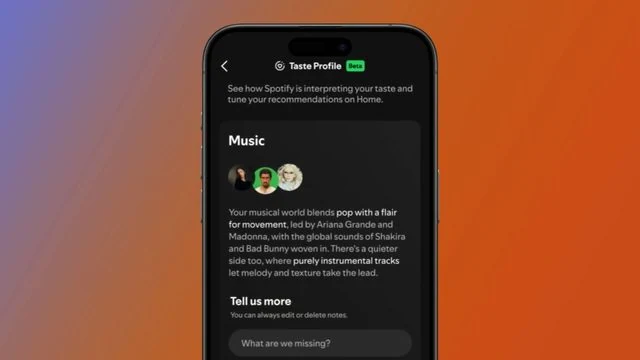
Spotify expands Taste Profile beta to eligible US listeners
Spotify is the music and audio streaming service.
Listeners can correct how their taste is represented; broader discovery beyond familiar interests is not established.
Why this example is here
US/NewZealand Premium18+, mobile, guidance to Homefeed. Not original global launch or control over entire recommendation algorithm.
Original sourceEditorial selection · reviewed 1 Nov 2026
Dates distinguish launches, announcements and substantial updates. Examples with a more indirect connection are labelled.
See the full selection for “MADE FOR ONE”THE SOURCE NOTESFollow the thinking 3 sources · what they show and where their limits lie
Sources and further reading
These sources inform the article. A product announcement describes an offer, not how widely people use it. Arguments and imagined futures are kept separate from observed results.
Full announcement re-read. US expansion on 23 September followed earlier New Zealand testing. For Premium listeners aged 18+, on mobile in the US and New Zealand. Editable or removable notes provide gentle guidance for the Home feed, not guaranteed precise control. No measured surprise or autonomy benefit claimed.
The value-capture discussion informs our interpretation. Nguyen is not credited with forecasting these specific consumer services.
Preprint revised19August2026. Personalized and generic agents show different between-person distinctiveness/within-person diversity trade-offs. Model, choice-set and sample boundaries apply. Study2 distinctiveness used inverse popularity; psychological diversity used semantic distance between item-description embeddings, not direct measurement of personality change or category diversity.
About this research edition
This article draws on selected sources and our interpretation of their implications for consumers. The wider collection contains 50 articles and original illustrations. We have not read everything by everyone on the reading list, calculated the probability of each future or established worldwide adoption. The collection is not exhaustive.
The illustrations are AI-generated, with a visual approach informed by TrendWatching’s 2024 and 2025 reports. They depict ideas rather than observed events. If an article’s central idea changes, its image needs another look. Small edits need not mean a new illustration; automatic replacement is not active.
Each innovation has a source, a review date and an explanation of its relevance and limits. Some are early signs of the change; others offer a useful comparison. None proves the forecast. Monthly monitoring and automatic selection of new examples are not running.