

Sub-shift
“ADAPTIVE ESSENTIALS”
Everyday services could become useful to more people by responding to the circumstances a standard offer overlooks.

A service can be available and still be difficult to use. The appointment is during a shift. The instructions assume knowledge the customer does not have. The delivery requires someone to be home at exactly the wrong time. None of these people necessarily needs a completely different product. They need the ordinary one to accommodate a real constraint.
“ADAPTIVE ESSENTIALS” explores how more services could make that adjustment. Over the next one to three years, we expect people to become more willing to explain their situation and ask for a workable fit, where responsive assistance makes that exchange easier.
A better explanation is only the beginning
Personalization often starts with what a service can readily observe: previous purchases, familiar choices or a regular schedule. Essential services encounter circumstances that are harder to infer. A temporary mobility limitation may change how someone travels. A new working pattern may change when an apparently convenient service can be used.
AI could make these combinations easier to communicate. A customer might describe the problem in ordinary language, and the service could identify which parts of its offer can change. The useful advance would be the connection between understanding the situation and providing a workable response.
This will not remove physical shortages or economic constraints. A provider may understand a need perfectly and lack the staff, vehicles or capacity to meet it. If the only affordable option requires the customer to rearrange their life, the service has not become more adaptive from that person’s perspective.
Economist Amartya Sen’s 1979 capability argument distinguished access to resources from the practical opportunities those resources create. That provides a useful lens here: an adjustment matters when it changes what somebody can actually do, rather than simply adding more personalized settings. [32]
People will keep changing the plan
A service also has to cope with a customer who departs from the pattern. Someone may choose comfort over efficiency today, have another person staying with them or decide an ordinary routine no longer suits them. An override can contain useful information about the situation.
A 2022 working paper by Alec Brandon and colleagues examined smart-thermostat interventions and found little evidence of the anticipated energy savings in that setting, with users’ adjustments helping explain the difference. It is a historical study, not a verdict on current adaptive products. The useful lesson is that a service has to work with the life people actually lead. [34]
For a provider, repeated exceptions may reveal an opportunity worth developing into a normal option. If customers regularly need a different handover, explanation or schedule, making it easier to obtain could broaden the usefulness of the service without creating a bespoke product for everyone.
Adaptation will sometimes be unnecessary. A clear, dependable standard can be cheaper and easier than a system that keeps asking questions or changing things. The opportunity is to identify the differences that matter enough to accommodate—and deliver the adjustment without making customers work harder to receive it.
Early signs of change.
by TrendWatching
2 closely related examples from the Innovation Database. Each helps explain an aspect of the shift. None establishes that the whole forecast will happen.

Heating mat adds opt-in temperature and presence adjustments
Kiturami is a South Korean heating manufacturer.
Optional temperature adaptation responds to individual settings and presence, within one everyday product.
Why this example is here
User enables AI mode with remote; ordinary heating mode also available. Manufacturer describes temperature/presence adjustments. No independent improved-sleep claim; 2027 is model year.
Original sourceEditorial selection · reviewed 1 Nov 2026
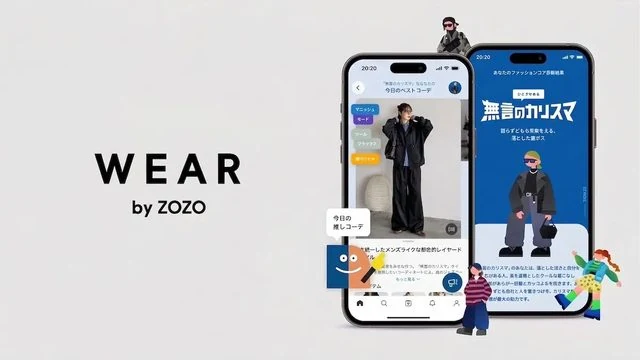
Product interface
An outfit recommendation comes with a reason and a try-on
ZOZO operates Japanese fashion platforms including WEAR.
Recommendations use relevant circumstances and existing clothes, rather than treating every shopper as the same size or taste.
Why this example is here
Virtual try-on illustrates a look; it is not a guarantee of physical fit. The experience also links to shopping on ZOZOTOWN.
Original sourceEditorial selection · reviewed 1 Nov 2026
Dates distinguish launches, announcements and substantial updates. Examples with a more indirect connection are labelled.
See the full selection for “MADE FOR ONE”THE SOURCE NOTESFollow the thinking 2 sources · what they show and where their limits lie
Sources and further reading
These sources inform the article. A product announcement describes an offer, not how widely people use it. Arguments and imagined futures are kept separate from observed results.
Sen distinguishes the resources people have from what they are able to do with them. Applying that distinction to adaptive services is our interpretation, rather than a technology forecast by Sen.
Specific thermostat intervention and households; null energy-saving results do not establish that all adaptive services fail.
About this research edition
This article draws on selected sources and our interpretation of their implications for consumers. The wider collection contains 50 articles and original illustrations. We have not read everything by everyone on the reading list, calculated the probability of each future or established worldwide adoption. The collection is not exhaustive.
The illustrations are AI-generated, with a visual approach informed by TrendWatching’s 2024 and 2025 reports. They depict ideas rather than observed events. If an article’s central idea changes, its image needs another look. Small edits need not mean a new illustration; automatic replacement is not active.
Each innovation has a source, a review date and an explanation of its relevance and limits. Some are early signs of the change; others offer a useful comparison. None proves the forecast. Monthly monitoring and automatic selection of new examples are not running.