

Sub-shift
“STILL MINE?”
People need a way to take honest pride in work made with assistance.

The family history contains your grandmother's stories, photographs you spent weeks finding and an ending you rewrote until it sounded right. AI helped turn the material into a book. When you give it to your family, how do you describe what you made?
That question is becoming relevant far beyond professional creativity. A speech, a picture, a small game or a personalized gift can combine a person's memories and choices with generated execution. The person may feel genuine pride in the result while being unsure how much credit to claim.
Over the next one to three years, we expect more consumers to want language and tools that help them explain this contribution. “STILL MINE?” follows the social meaning of authorship when assistance does a substantial share of the making. It is about pride and recognition, rather than a legal verdict on ownership.
What the person brought to it
The finished result and the credit given to its maker can be evaluated differently. In two studies with UK participants, Maryam Ali Khan and colleagues presented identical paintings with different accounts of their production. Describing AI as personalized to an artist increased the credit and authorship attributed to that person relative to standard AI, without an equivalent increase in aesthetic appreciation. These were responses to descriptions, not purchases. [61]
The commercial implication is that a tool can help someone make a pleasing object without helping them understand their role in it. Conversely, a person's choices can matter to them and to the recipient even when the final object looks no better.
That leaves considerable room between claiming to have done everything and dismissing the result as something the machine made. Someone may have supplied the experience, selected the references, rejected unsuitable directions and made a crucial change. Another may have simply chosen a result they liked. Both contributions can be described accurately.
Keep the choices with the work
If you build creative tools, consider what customers might want to remember or explain after they finish. Preserve the original recollections in a family-history project. Make significant revisions easy to revisit. Let people distinguish generated passages from words they supplied, without turning every action into a productivity score.
The account should help the recipient understand the gesture. An AI-assisted wedding speech may express something deeply considered; concealing the assistance could still change how it is received. Context matters. A private family gift and a work offered for sale carry different expectations about credit.
Avoid making customers perform extra labour just to prove they participated. Prompt counts and hours logged cannot establish creativity. A short account of the decisions they made may be enough to explain why the result feels like theirs.
Your tools could help people say, plainly, which parts came from them and which parts they chose to make with help.
Early signs of change.
by TrendWatching
2 closely related examples from the Innovation Database. Each helps explain an aspect of the shift. None establishes that the whole forecast will happen.
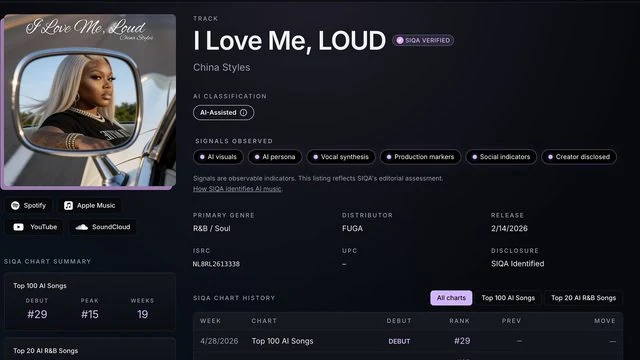
Music registry records disclosed AI involvement
SIQA operates a registry for music provenance and disclosed AI involvement.
A registry distinguishes types of AI involvement in submitted music; it is not universal detection or proof of ownership.
Why this example is here
Registry fingerprints registered tracks and classifies disclosed involvement. Not universal AI detector, legal ownership proof or industry consensus.
Original sourceEditorial selection · reviewed 1 Nov 2026
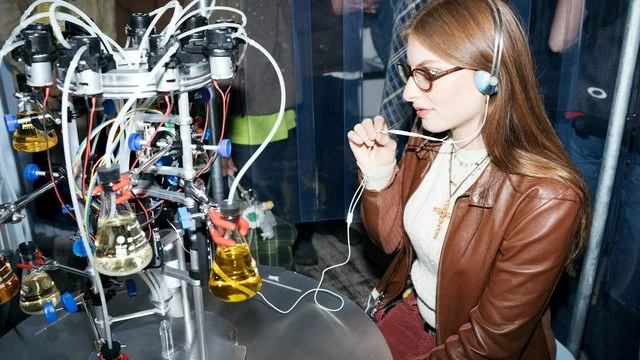
Experience image
A spoken memory becomes a personal fragrance
London fragrance house Index
A customer’s memory and a perfumer’s authored bases remain distinguishable inputs to a machine-assisted creation.
Why this example is here
This interprets a story rather than reproducing a memory or demonstrating lasting identity change. The September pop-up has ended; a separate October event was also temporary.
Original sourceEditorial selection · reviewed 1 Nov 2026
Dates distinguish launches, announcements and substantial updates. Examples with a more indirect connection are labelled.
See the full selection for “PROOF OF HUMAN”THE SOURCE NOTESFollow the thinking 1 source · what they show and where their limits lie
Sources and further reading
These sources inform the article. A product announcement describes an offer, not how widely people use it. Arguments and imagined futures are kept separate from observed results.
Author-uploaded full text; UK sample, identical images with production descriptions. Credit and aesthetic judgments separated; not legal ownership or sales evidence.
About this research edition
This article draws on selected sources and our interpretation of their implications for consumers. The wider collection contains 50 articles and original illustrations. We have not read everything by everyone on the reading list, calculated the probability of each future or established worldwide adoption. The collection is not exhaustive.
The illustrations are AI-generated, with a visual approach informed by TrendWatching’s 2024 and 2025 reports. They depict ideas rather than observed events. If an article’s central idea changes, its image needs another look. Small edits need not mean a new illustration; automatic replacement is not active.
Each innovation has a source, a review date and an explanation of its relevance and limits. Some are early signs of the change; others offer a useful comparison. None proves the forecast. Monthly monitoring and automatic selection of new examples are not running.